
Our Team
CTRP Leadership

Alicia Lieberman, PhD
Director
Alicia is the Irving B. Harris Endowed Chair in Infant Mental Health and Vice Chair for Academic Affairs at the UCSF Department of Psychiatry, and Director of the Child Trauma Research Program. She is a clinical consultant with the San Francisco Human Services Agency. She is active in major national organizations involved with mental health in infancy and early childhood. She is past-president of the board of directors of Zero to Three: National Center for Infants, Toddlers and Families, and on the Professional Advisory Board of the Johnson & Johnson Pediatric Institute. She has served on peer review panels of the National Institute of Mental Health, is on the Board of Trustees of the Irving Harris Foundation, and consults with the Miriam and Peter Haas Foundation on early childhood education for Palestinian-Israeli children.
Born and raised in Paraguay, she received her BA from the Hebrew University of Jerusalem and Ph.D. from Johns Hopkins University. This background informs her work on behalf of children and families from diverse ethnic and cultural origins, with primary emphasis on the experiences of Latinos in the United States.
Alicia is currently the director of the Early Trauma Treatment Network (ETTN), a collaborative of four university sites that include the UCSF/SFGH Child Trauma Research Program, Boston Medical Center, Louisiana State University Medical Center, and Tulane University. ETTN is funded by the federal Substance Abuse Mental Health Services Administration (SAMHSA) as part of the National Child Traumatic Stress Network, a 40-site national initiative that has the mission of increasing the access and quality of services for children exposed to trauma in the United States. Her major interests include infant mental health, disorders of attachment, early trauma treatment outcome research, and mental health service disparities for underserved and minority children and families. Her current research involves treatment outcome evaluation of the efficacy of child-parent psychotherapy with trauma-exposed children aged birth to six and with pregnant women involved in domestic violence. As a trilingual, tricultural Jewish Latina, she has a special interest in cultural issues involving child development, child rearing, and child mental health. She lectures extensively on these topics nationally and internationally.

Miriam Hernandez Dimmler, PhD
Community Mental Health Initiative Director
Miriam coordinates community-based mental health outreach services and evaluation at the Child Trauma Research Program. Born and raised in New York City, she received her B.A. from Columbia College of Columbia University in New York where she majored in psychology and the biological sciences. She moved to the San Francisco Bay Area to complete her Ph.D. from the University of California, Berkeley in clinical science and community psychology. Her graduate training was funded by the National Science Foundation Graduate Research Fellowship, Chancellor’s Opportunity Fellowship, Spencer Foundation Dissertation Fellowship and a UC Dissertation-year Fellowship.

Chandra Ghosh Ippen, PhD
CPP Dissemination and Implementation Director
Chandra trained in Child-Parent Psychotherapy at the Child Trauma Research Program as an intern and postdoctoral fellow from 1998-2000. She spent a year as adjunct faculty for the CAARE Center at UC Davis. She rejoined CTRP in 2001 as the Associate Research Director and helped lead the team’s partnership with the National Child Traumatic Stress Network. In 2013, she became the CPP Dissemination and Implementation Director.
Chandra developed the CPP Fidelity Framework and is co-author of the 2nd edition of Don’t Hit My Mommy, the manual for CPP. She has led international CPP implementation efforts in Sweden and Norway and has co-led national implementation efforts in multiple states including California, Minnesota, Wisconsin, New Mexico, and Oklahoma.
She is the developer of the Ripple Effect Curriculum, a manualized curriculum designed to support the development of trauma-informed systems by sharing core trauma concepts using a combination of stories, visuals metaphors, and clinical vignettes. She has conducted over 34 Ripple Effect trainings in 15 states as well as in Norway and Sweden. She has also authored 6 chapters on diversity-informed practice and trains regularly on this topic.
She has written numerous children’s books that serve as population-based interventions for children who have experienced stressful events, including the Trinka and Sam disaster series, Once I Was Very Very Scared, which has been translated into English, Spanish, Arabic, Turkish, and German, and You Weren’t With Me, which is available in English and Spanish, and was written to support families who have experienced stressful separations.

Ann Chu, PhD
Associate Dissemination Director
Ann is an Associate Clinical Professor at the University of California, San Francisco (UCSF) and Associate Dissemination Director for Child-Parent Psychotherapy at the UCSF Child Trauma Research Program. As Associate Dissemination Director, Ann works with the CPP Dissemination and Implementation Team to train community providers in CPP, standardize CPP training model components, and develop dissemination tools that can further the implementation of CPP.

Vilma Reyes, PsyD
Training Director
Vilma is an Associate Clinical Professor and the Training Director at the University of California, San Francisco in the Child Trauma Research Program. Since 2009, she has been providing Child-Parent Psychotherapy services, training, clinical supervision, consultation and coordinating community-based mental health outreach services and evaluation. She is a CPP Trainer and has co-authored articles and chapters on CPP theory and application.

Allie Sullivan, PhD
Research Director
Allie is an Assistant Professor and child clinical psychologist at the University of California, San Francisco specializing in trauma-informed, evidence-based interventions for children exposed to stress, with a particular focus on pregnancy and parent-child modalities. Additionally, she serves as the Research Director for UCSF’s Child Trauma Research Program. Integrating frameworks from developmental psychopathology, intervention science, and biobehavioral research, she aims to understand and interrupt mechanisms through which adversity is passed across generations. Allie’s current work investigates how supporting caregivers (via behavioral, psychosocial, or biologically informed strategies) can buffer children from the impacts of early life and intergenerational adversity.
CTRP Staff

Adriana Bowen, LPCC, IMH-E®
CTRP Trainer
Adriana spent her formative years in Bogotá, Colombia where she studied Clinical Psychology. At the University of Geneva Switzerland, she studied Developmental Psychology and during her Master’s in Counseling in the U.S, she specialized in Infant Mental Health. She completed her CPP training in Southwestern New Mexico in 2013 and provided CPP supervision and consultation to clinicians and supervisors across New Mexico. Adriana has been a CPP trainer and consultant for CTRP since 2020. In 2025, she became a CPP CAMP trainer as well as a P-CPP trainer.
She is bicultural and multilingual. Professionally, her main goal is to assist all families through prevention and intervention programs, so their young children grow in safety and health. She has 25+ years of experience in program design, implementation, in home visitation services and community based mental health. Personally, her family is a central part of her life and dancing is her favorite thing to do.

Barclay Stone, PsyD
Clinical Lead
Barclay is a licensed clinical psychologist and the intake coordinator and clinical lead at the UCSF Child Trauma Research Program. Barclay coordinates referrals, provides clinical supervision, and offers Child-Parent Psychotherapy and Perinatal CPP to Spanish-speaking families. As part of the Tipping Point Community Mental Health Initiative, Barclay provides trauma-focused consultation and capacity building at community-based partnership programs.
Barclay earned her BA in Latin American Literature with a minor in Education at Dartmouth College. Graduate work in Latin American literature brought her to U.C. Berkeley. She received her master’s degree and went on to teach Spanish and work in women’s reproductive health locally and abroad until figuring out that clinical psychology was the career that would allow her to meld many of her interests.
Barclay received a doctorate in clinical psychology from the Wright Institute in Berkeley, CA. Her dissertation was titled “Acculturative Stress in Mexican Immigrant Women and the Nature and Role of Social Support.” She completed her predoctoral internship and two years of postdoctoral fellowship here at the Child Trauma Research Program and then worked for 4 years as a staff psychologist at the UCSF Trauma Recovery Center, treating adult PTSD in victims of violent crime, refugees and asylum seekers. In her free time she loves to make herbal medicines, read, hike and spend time with friends and family.

Ben Spevack, BA
Dissemination Analyst
Ben joined the Child Trauma Research Program as a Dissemination Analyst in 2021. He previously worked as a senior analyst researching wildlife conservation and human security in Washington, DC, and has volunteered as an EMT in Massachusetts and Maryland. He brings interdisciplinary experience in database curation, qualitative and quantitative analysis, and international training. Outside of work, Ben enjoys swimming, reading fiction, and studying language.

Brooke Kimbro, LPCC
Dissemination Coordinator
Brooke is the Dissemination Coordinator for Child-Parent Psychotherapy and Trainer/Consultant for Attachment Vitamins. Before joining the Child Trauma Research Program, Brooke served as clinical coordinator for a Boston area program that provides therapeutic services to children exposed to violence and their families. She brings working knowledge of dissemination and implementation of evidence-based practices, having completed several learning collaboratives in her career, including two in CPP. She is a Licensed Clinical Professional Counselor in California and holds a Master’s Degree in Dance/Movement Therapy. Brooke draws on her experience as mother of two and her passion for all forms of dance and movement. As the Hopi Proverb says, “To watch us dance is to hear our hearts speak.”

Gina Samson, PsyD
Behavioral Health Specialist
Gina is a Licensed Clinical Psychologist at the University of California, San Francisco, within the Department of Psychiatry and Behavioral Health Sciences. She is a member of the Child Trauma Research Program, where she is deeply committed to helping children, families, and communities thrive.
Gina specializes in Child-Parent Psychotherapy and Perinatal Child-Parent Psychotherapy, providing trauma-informed, relationship-based care to infants, young children, and their families who have experienced trauma. She also provides clinical supervision to trainees.
In addition to her clinical work, Gina trains audiences across the nation, delivering workshops and interactive learning sessions on early childhood mental health, trauma, trauma-informed systems of care, and related topics.
Gina collaborates with a range of community-based organizations, service systems, and interdisciplinary teams to support the implementation of trauma-informed, developmentally grounded, and equity-focused practices in diverse settings. She is committed to helping organizations realize and achieve their goals, and create lasting positive change.
In her personal time, Gina can be found spending time with the people she loves and traveling the globe.

Gloria Castro, PsyD
Clinical Supervisor
Gloria is a clinical psychologist and Certified Sexual Assault Counselor. She was granted the Fraiberg-Harris Fellowship to complete her postdoctoral training at the UCSF Infant-Parent Program. Gloria’s clinical work has focused on infant mental health and mental health daycare consultation. She has experience conducting comprehensive psychological assessments and developmental neuropsychological assessments for children ranging in age from infancy to adolescence. Gloria provides psychotherapy to pregnant women with history of traumatic experiences throughout pregnancy, labor, delivery and post-partum at UCSF. She provides infant mental health services to families and newborns at the NICU and has provided mental health services at the High Risk Pediatric Kempe clinic. She has worked with children, adolescents, and families in various clinical venues including Rape Trauma Services and North Peninsula Family Alternatives (YMCA), in San Mateo County where she developed and implemented a mental health program for immigrant families. She consults, supervises, and trains mental health providers who work with immigrant families and their children who have experienced significant trauma. Gloria has a strong interest on the impact of immigration on family systems, the intergenerational transmission of trauma, and the impact of trauma on children’s development. Prior to coming to the Child Trauma Research Program and Infant-Parent Program, she worked at the Children’s Hospital, National Medical Center in Mexico City and at the National Autonomous University of Mexico (UNAM).
Gloria has presented at national and international forums on the topics of parenting in a different culture and on the impact of immigration on the sense of self and motherhood identity. In addition to her work at UCSF, Gloria has taught at Argosy University, American School of Professional Psychology. She also served on the Advisory Board.

Laura Rosero-Rondon, BS
Research Coordinator
Laura is member of the Research team. As the Clinical Research Coordinator, she manages the submission of research protocols for Institutional Review Board approval, develops and maintains Redcap databases, coordinates the data collection for all intervention studies, collaborates in study design and implementation, tracks study progress, generates internal reports, and conducts data analyses.

Markita Barideaux, LCSW
CTRP Trainer
Markita is is the Behavioral Health Director for EMBRACE Perinatal Care and a Child-Parent Psychotherapy Trainer for the Child Trauma Research Program, both in the Department of Psychiatry and Behavioral Sciences at the University of California San Francisco. She is a perinatal and infant mental health leader and community systems innovator. She develops culturally rooted frameworks bridging hospitals, community, early childhood, and perinatal mental health care. Markita is committed to understanding the intersection and intergenerational patterns of race and trauma for African American families and communities and has a special interest in healing interventions rooted in spiritual/indigenous practices and traditions. In addition to administrator duties, she provides clinical services, supervision, and training.
She is the 2020 recipient of the Zero To Three Emerging Leader Award, served as a Dean Diversity Leader (2016-2018) for the UCSF School of Medicine’s Differences Matter Initiative, and the 2015 UCSF Chancellor Award for Dr. Martin Luther King, Jr. Leadership.

Melissa Bond, PhD
Professional Researcher
Melissa completed her pre-doctoral internship and postdoctoral fellowship at the Child Trauma Research Program before starting as an Assistant Professional Researcher in 2023. In this role, Melissa combines her clinical knowledge, research acumen, and web development experience to develop and manage databases, assist in advanced user experience needs, and provide methodological and research support. She is looking forward to further developing CTRP’s research efforts to better understand the nuances of Child-Parent Psychotherapy both at the “Mothership” and in the broader community. In her free time, Melissa is usually training with her dogs, cooking (and eating) good food, and playing video games.

Mitchell Kazeminejad, JD
Finance
Mitchell began his career at UCSF in 2015 and joined the Child Trauma Research Program in 2024. He oversees budgets, cash flow, and financial reporting, ensures compliance with funding and regulatory requirements, and supports leadership in understanding the financial impact of decisions to promote long-term sustainability. His academic background is rooted in law, and he holds a Master of Legal Studies and a Juris Doctor.

Monica Alejandra Noriega, PsyD
Assistant Professor
Monica is a licensed clinical psychologist specializing in perinatal and infant mental health. She earned her doctorate in clinical psychology from the Wright Institute and completed her post-doctoral fellowship at the UCSF Child Trauma Research Program. She currently serves as clinical faculty in the Department of Psychiatry and Behavioral Sciences, providing direct clinical service and supervision in evidence-based practices for prenatal to five, including Child-Parent Psychotherapy, Perinatal Child Parent Psychotherapy, and Healthy Steps. In her capacity as a researcher, Monica prioritizes centering the voices of communities disproportionately impacted by complex and immigration trauma to guide the development of mental health interventions. She is also an international trainer and consultant for organizations serving traumatized populations. As a proud Chicana and bilingual practitioner, she is passionate about weaving the wisdoms of evidence-base practices and community-based healing technologies.

Rachel Tomlinson, PhD
Postdoctoral Fellow
Rachel is a postdoctoral fellow in the UCSF Department of Epidemiology and Biostatistics and a member of the Child Trauma Research Program. She is a clinical psychologist and rostered Child-Parent Psychotherapy clinician, and her work bridges translational neuroscience, developmental psychopathology, and precision modeling approaches. She is currently a full-time researcher studying the contextual influences on executive functioning in early childhood.
Rachel completed her B.S. in Psychology and Biology at Duke University, where she first developed her interest in the interplay between development, stress, and cognitive functioning. She then received her Ph.D. in Clinical Psychology from the University of Michigan and completed her clinical internship and postdoctoral fellowship at UCSF. Her research examines the intergenerational transmission of executive functioning, with a focus on how early adversity affects both the parent-child relationship and child development. She applies computational modeling techniques to better capture individual differences in cognitive functioning and identify early markers of risk and resilience. Her work has been supported by the National Science Foundation Graduate Research Fellowship, the UCSF NIA T32 in Translational Epidemiology, and, most recently, the NIH ECHO Opportunities and Innovation Fund, which supports her work modeling Efficiency of Evidence Accumulation (EEA) in early and middle childhood.
Within CTRP, Rachel is particularly interested in how intervening on the parent-child relationship may promote better executive functioning development. Her long-term goal is to develop biologically grounded, developmentally sensitive models of cognitive and relational health that can inform early intervention efforts for families facing adversity. She is committed to reducing mental health disparities and advancing culturally responsive care for families facing adversity.

Shondra Davis, PsyD
CPP Sustainability Director
Shondra began her training in Child-Parent Psychotherapy at the Child Trauma Research Program as a pre-doctoral intern in 2012. After completing her doctoral degree, she went on to spearhead the CPP Agency Mentorship Program (CAMP) at Instituto Familiar de la Raza in San Francisco. She later joined the Early Childhood Services team of The Jewish Board in New York city. She served as the Director of the Early Childhood Mental Health Consultation program and the Harlem Child Development Center’s early childhood outpatient clinic. While at The Jewish Board, she continued her apprenticeship as a CPP Agency Trainer and supported the agency’s CAMP application process. During that time, she also initiated an innovative trauma focused parent peer program for parents with child welfare involvement in collaboration with the Field Guide to Barefoot Psychology in an effort to combat mental health stigma and increase access to services in communities overly impacted by trauma. Shondra has worked in community-based health care settings for over 25 years. As a bilingual clinician, she has worked extensively with Spanish speaking children and families. She weaves together her training as a psychologist with specialized training in integrative somatic approaches to trauma therapy, meditation and yoga. She supports children, families and staff to envision, embody and invite wholeness, connection and vitality back into their lives. Shondra is pleased to rejoining the CPP mothership. She looks forward to supporting partner agencies in the CAMP application and implementation process. In her spare time, she can be found, watching the clouds float by, trying her hand at a new DIY project or creating sound meditations for friends and family. She lives by the motto: “Will travel for delicious food!”

Tessa Pickard, LCSW
Licensed Clinical Social Worker
Tessa is a Licensed Clinical Social Worker with UCSF’s Child Trauma Research Program. She completed post-graduate fellowship training at the Napa Infant–Parent Mental Health Program through UC Davis and is credentialed in California as an Infant and Early Childhood Mental Health Specialist and Reflective Facilitator. Tessa brings a strong commitment to social justice and advancing equitable access to care for young children and their families.
Her clinical and training work focuses on early childhood trauma as well as medically fragile infants and young children with developmental disabilities, with particular attention to the role of caregiver–child relationships in supporting healing, growth, and healthy development. She is a rostered Child-Parent Psychotherapy Provider and Supervisor and works as a trauma-informed trainer alongside her therapy practice supporting both families and providers in building relational, developmentally responsive caregiving/systems of care.
Postdoctoral Fellows
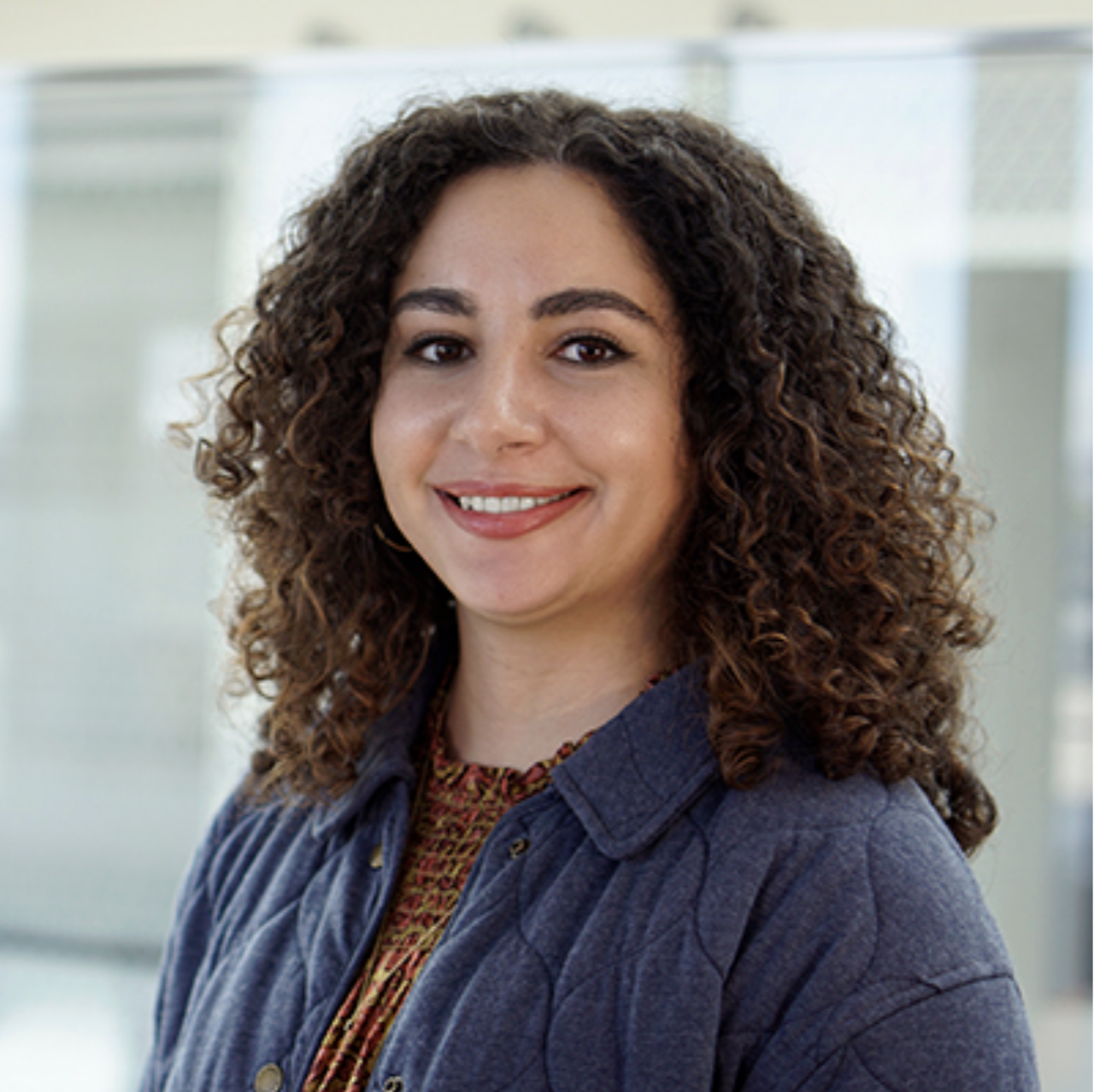
Amina Foda-Khoury, MPH, PsyD
Postdoctoral Fellow
Amina is a third year Postdoctoral Fellow at the UCSF Child Trauma Research Program. She completed her APA accredited predoctoral internship at WestCoast Children’s Clinic in Oakland, CA, and received her PsyD from the Wright Institute in Berkeley, CA. Beginning from her first clinical practicum, she has focused on trauma treatment with children and their caregivers, adolescents, and adults in various community, school, and outpatient settings. Prior to beginning her graduate education in clinical psychology, she completed a Master of Public Health in Epidemiology from Columbia University with an emphasis on Social Determinants of Health. She went on to work at the California Department of Public Health, Maternal Child and Adolescent Health Division as an epidemiologist analyzing state level data in support of maternal and infant programs and policy. The golden thread throughout all her training and work is an effort to prevent and intervene on intergenerational trauma at multiple levels of care and society, with a particular passion for the perinatal and early childhood life stage. As a bicultural and bilingual Egyptian American, increasing access to care and working with historically marginalized communities is a cornerstone to all her clinical and research pursuits. She currently provides services in English.
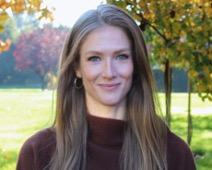
Hannah Fritz, PhD
Postdoctoral Fellow
Hannah is a clinical psychology postdoctoral fellow at the University of California, San Francisco Child Trauma Research Program. She provides direct clinical services to families who have experienced trauma, including Child-Parent Psychotherapy and Perinatal Child-Parent Psychotherapy. She is also committed to integrating clinical work with research on evidence-based interventions and serves as a member of the research team at CTRP.
Hannah received her doctorate in Clinical Psychology from the University of Southern California in Los Angeles, CA. Her dissertation, “Disrupting the Cycle of Intergenerational Childhood Maltreatment: Exploring Mechanisms and Identifying Targets for Intervention,” focused on understanding how trauma is passed down through family lineages and identifying effective ways to partner with families to heal intergenerational patterns. Before joining the team at CTRP, Hannah completed her doctoral internship in Clinical Child and Adolescent Psychology at Stanford Children’s Hospital in Palo Alto, CA. During this time, she provided comprehensive care across various settings, including community-based outpatient therapy and neuropsychological evaluation, intensive outpatient care for high-risk adolescents, and pediatric integrated behavioral health services. She completed her pre-doctoral practica at the University of California, Los Angeles, working with families navigating family trauma and community violence in the Stress, Trauma, and Resilience (STAR) Clinic and supporting parents with infants in the NICU experiencing birth trauma, medical complications, and loss through the Family Development Program.
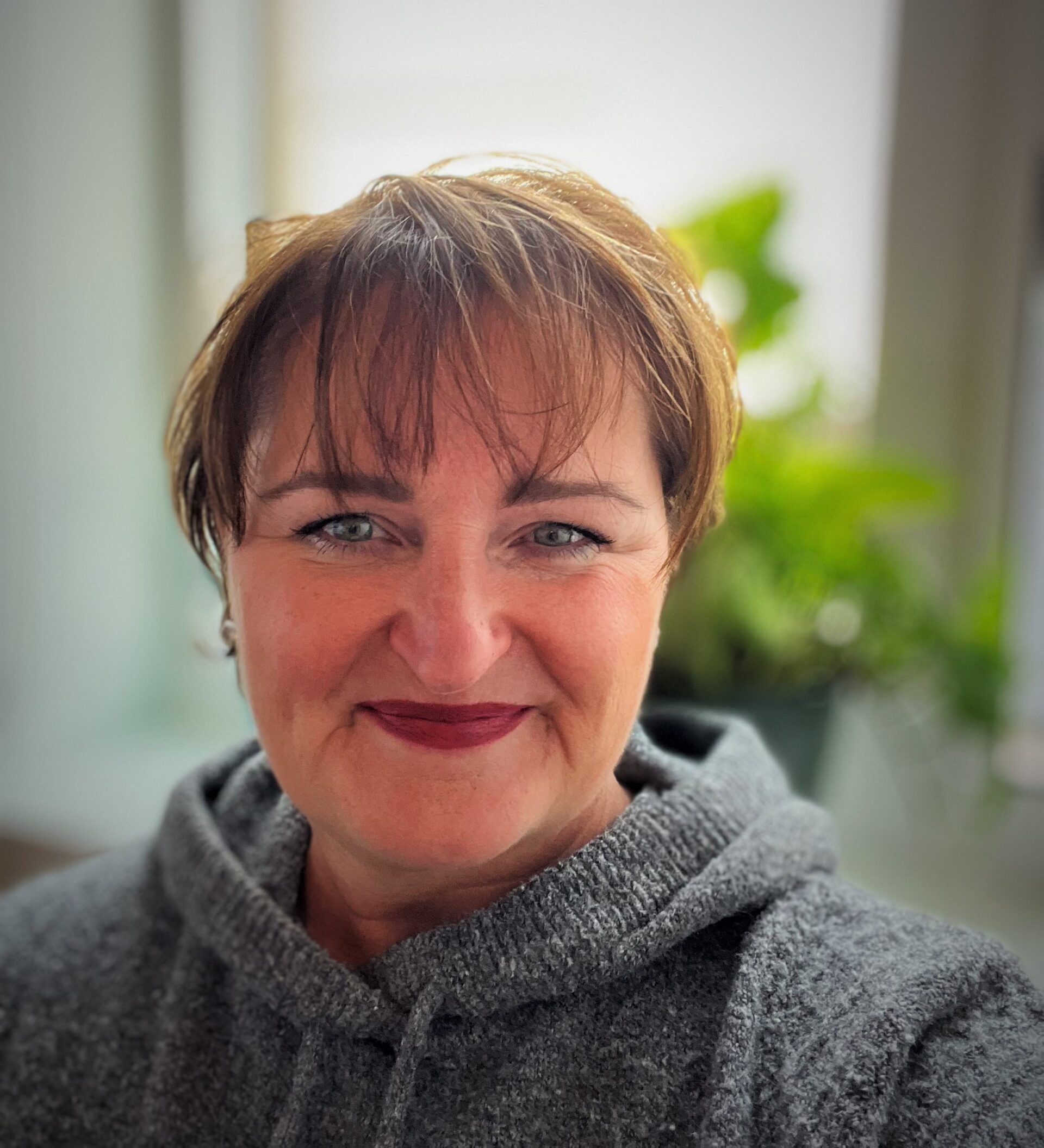
Melanie Catherine Elson, PsyD
Postdoctoral Fellow
Melanie joined the Child Trauma and Research Program in September 2025 as a postdoctoral clinical psychologist, where she specializes in providing Child-Parent Psychotherapy to children and families who have experienced trauma. Melanie brings extensive clinical expertise in evidence-based, trauma-informed practices, backed by multiple specialty certifications and advanced training. Melanie is deeply committed to trauma-informed, client-centered care, with a particular focus on childhood and family settings. She believes that healing and resilience are best supported through strong, trusting therapeutic relationships.
Before pursuing her postdoctoral work, Melanie completed her predoctoral internship at Centerstone Community Mental Health Clinic in Florida, working in their Rape Crisis/Sexual Assault Services Department. There, she provided trauma-informed care to survivors of sexual assault, gaining invaluable experience in addressing the unique and often difficult needs of trauma survivors. This training reinforced her commitment to working with individuals and families to help them heal and build resilience.
Melanie earned her Doctorate in Clinical Psychology from Wheaton College in Wheaton, IL, where she also focused her research on the intersection of race and identity. Her dissertation, titled “Perceived Racism: An Examination of its Effects on Multiracial Identity Formation,” explored how experiences of racism shape the development of identity in multiracial individuals. This research allowed her to gain a deeper understanding of the psychological challenges faced by those navigating complex racial and cultural identities.
In her spare time, Melanie enjoys spending time with her daughter, hiking, walking her two little dogs, and exploring the nature and beauty of San Francisco.
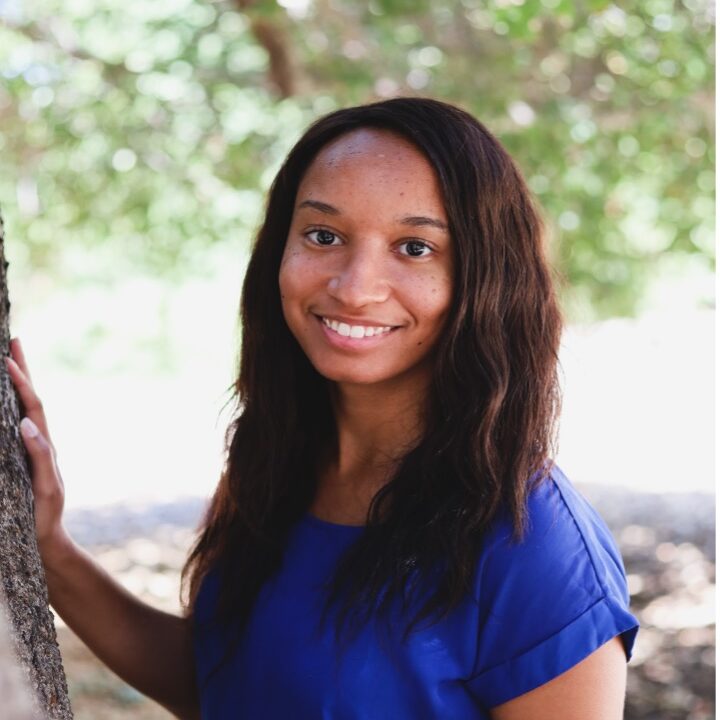
Sydney Morris, PhD
Postdoctoral Fellow
Sydney is a graduate of Palo Alto University’s clinical psychology program and a postdoctoral fellow at the Child Trauma Research Program. Currently, she splits her time between CTRP and EMBRACE, a perinatal health clinic that serves Black pregnant people. Sydney’s interests include infant and early childhood mental health, Black perinatal mental health, and integrating liberation psychology and other decolonial practices into both clinical work and research. Outside of work, Sydney enjoys spending time with her cat, reading, and being with friends and family